
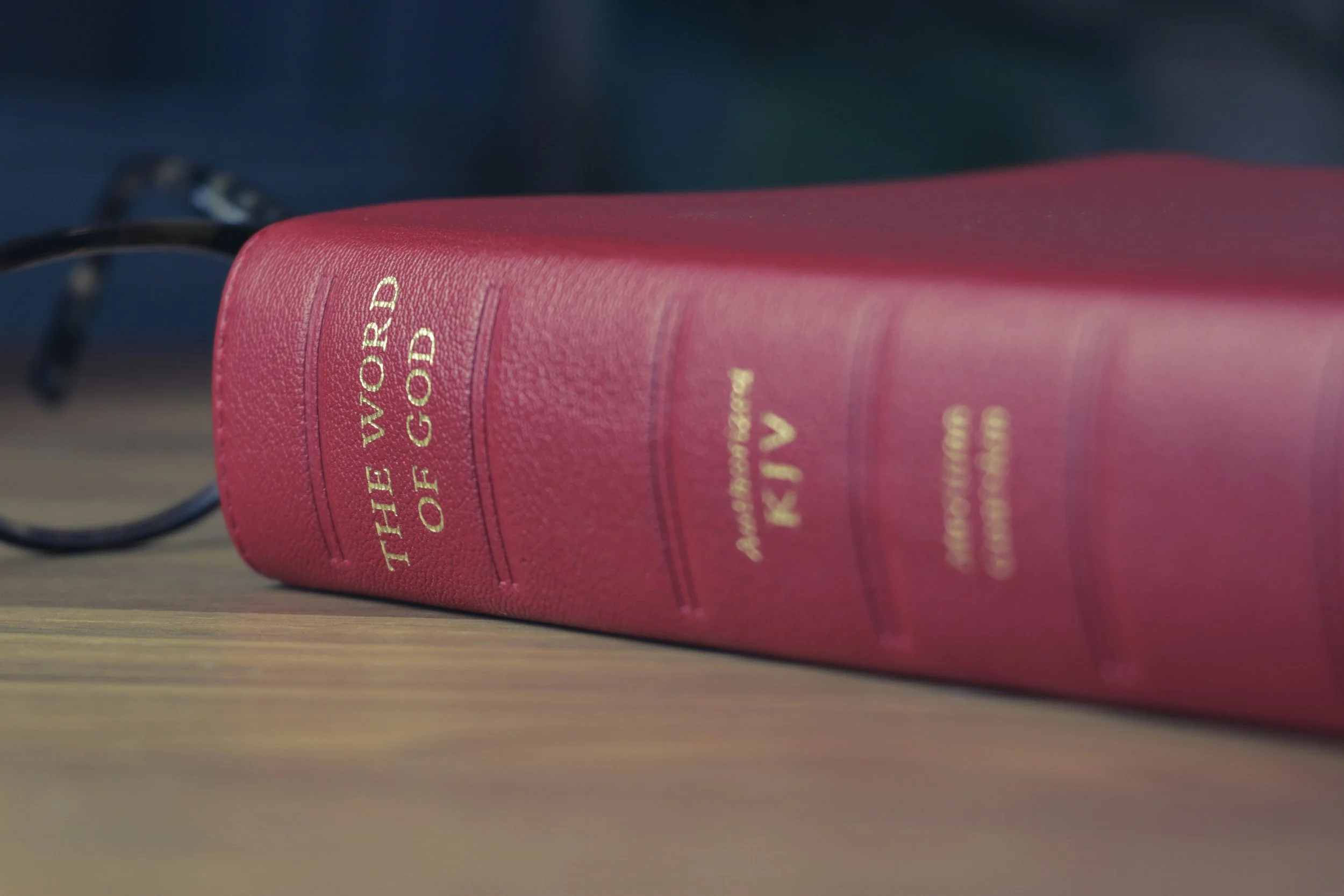

Why Are We Independent Fundamental Baptists?
Why Are We IFB?
IFB stands for Independent Fundamental Baptist. It is the acronym we use to describe the type of church we are. While the term may not be widely recognised here in Australia — where we simply describe ourselves as a Baptist church with old-fashioned preaching and music — it is important that we understand what we believe and why we identify this way.
The most important letter in IFB is B. The letters I and F are also both important.
Here is what each one means and why it matters.
B — Baptist
Salvation by Grace Through Faith
The core of what makes us Baptist is our belief in salvation by grace through faith alone.
"For by grace are ye saved through faith; and that not of yourselves: it is the gift of God: not of works, lest any man should boast." — Ephesians 2:8–9
Salvation is 100% free. It is not based on what we do, what we give up, or how we live. We choose to believe on the Lord Jesus Christ, we get saved, and we are saved eternally. If there were any works at all added to salvation, we could boast about deserving to go to heaven — but nobody can boast, because it is entirely by God's grace.
This separates us from a number of false positions:
The Catholic Church teaches that salvation is accessible through repentance, faith, and baptism. Baptism is a work. Adding baptism to salvation makes it a works salvation.
The Orthodox Church quotes Ephesians 2:8–9 and then immediately undermines it by saying faith without works is dead, and therefore you cannot have faith without works. They end up teaching that faith, works, and grace are all necessary ingredients for salvation. That is not what the Bible teaches.
Many Protestant and Reformed churches claim to believe in salvation by faith alone while simultaneously teaching that if you are truly saved you will have good works — and if you do not, you were never saved. This is Calvinism's doctrine of the perseverance of the saints, which they incorrectly label as eternal security. There is a significant difference between the two. Perseverance of the saints teaches that you must endure to the end, and if you do not, you were never really saved. The preservation of the saints — what we believe — teaches that God keeps us saved no matter what. We are not preserved by our own faithfulness but by God's.
"To them that are sanctified by God the Father, and preserved in Jesus Christ." — Jude 1:1
God is the one keeping us saved, just as you would preserve fruit in a jar. We do not have to keep ourselves saved or worry about our salvation after we believe.
We also reject the teaching that repenting of your sins is a condition of salvation. If someone teaches that you must quit drinking, quit smoking, or turn from your lifestyle in order to be saved, that is a works salvation. Works are not the evidence of salvation, and they are not automatic after salvation either. If works were automatic, the Bible would have no reason to repeatedly command believers to live godly lives — the very fact that God commands it shows it is not guaranteed.
Baptism by Immersion After Salvation
Baptists also believe that baptism is by full immersion and must take place after a person believes — not before, and never as an infant.
"If thou believest with all thine heart, thou mayest." — Acts 8:37
A baby cannot believe. And sprinkling water on a person's head is not immersion. The Bible says we are "buried with him in baptism" — burial requires full immersion. This is why John chose to baptise where there was much water — because to fully immerse a person, you need it.
Baptism does not save. It is a public picture of the death, burial, and resurrection of Jesus Christ, declaring to the world that you have believed on him for your salvation.
F — Fundamental
To be fundamental means to hold to old-fashioned, biblical standards without compromise. A lot of Independent Baptist churches in Australia are dropping the term ‘Fundamental’ from their name or shying away from this term, this often leads to softening of their preaching and their positions on social issues. We do not do that.
"Thus saith the Lord, Stand ye in the ways, and see, and ask for the old paths." — Jeremiah 6:16
"Cry aloud, spare not, lift up thy voice like a trumpet, and shew my people their transgression, and the house of Jacob their sins." — Isaiah 58:1
Being fundamental means we preach against sin. It means the preaching is applicable and direct. It means we do not water things down to avoid offending people.
Some of the positions this includes:
Roles in the home. The Bible is clear that the husband is the head of the wife, just as Christ is the head of the church. Wives are commanded to submit to their own husbands. This is not a cultural opinion — it is a direct biblical command, and we preach it without apology.
Modesty and gender distinction."The woman shall not wear that which pertaineth unto a man, neither shall a man put on a woman's garment: for all that do so are abomination unto the Lord thy God." — Deuteronomy 22:5. Men ought to dress and act like men. Women ought to dress and act like women. This is becoming increasingly counter-cultural, which is precisely why it needs to be preached.
Hair length."Doth not even nature itself teach you, that, if a man have long hair, it is a shame unto him? But if a woman have long hair, it is a glory to her." — 1 Corinthians 11:14–15
Music. The Bible speaks about songs, hymns, and spiritual songs. We use old-fashioned hymns that give glory to God, teach doctrine, and stir the soul. Contemporary Christian music that mirrors the style of the world is not what we sing in this church.
These are not peripheral issues. They are part of what it means to be a church that does not compromise with the world.
I — Independent
Independent means we are not under the authority of any denomination or outside organisation. God gives individual pastors to run individual local churches.
"And he gave some, apostles; and some, prophets; and some, evangelists; and some, pastors and teachers; for the perfecting of the saints, for the work of the ministry, for the edifying of the body of Christ." — Ephesians 4:11–12
When a denomination has one person or committee at the top of a centralised organisation, corruption at the top corrupts everything beneath it. Independence protects local churches from this. Each church answers directly to God, not to a hierarchy.
This does not mean we are isolated. We gladly fellowship with and support any church that is clear on salvation and actively goes soul-winning. We consider those churches to be on our side, regardless of whether they use the exact same terminology we do.
"Whosoever is not against us is on our part." — Mark 9:40
Where we draw the line on fellowship is not over secondary interpretive differences, but over core doctrine — specifically the gospel. Any church teaching a works salvation, denying eternal security, or that is not a soul-winning church is a church we cannot closely associate with. Any church that is clear on salvation and going out to preach the gospel is a church we consider a partner in the work of God.
In Summary
We are IFB because:
We believe salvation is by grace through faith alone — not by works, not by repentance of sins, not by baptism, and not conditioned on how you live after you are saved. God preserves us eternally the moment we believe.
We believe baptism is for believers only, by full immersion, as a picture of the death, burial, and resurrection of Christ.
We are fundamental — we hold to old-fashioned biblical standards, preach against sin without compromise, and do not change our convictions to accommodate the culture.
We are independent — we are a self-governing local church, accountable to God and to the word of God, with no denominational structure above us.
These are not preferences. They are convictions drawn directly from the word of God.
This is why we are proud to call ourselves an Independent Fundamental Baptist church.